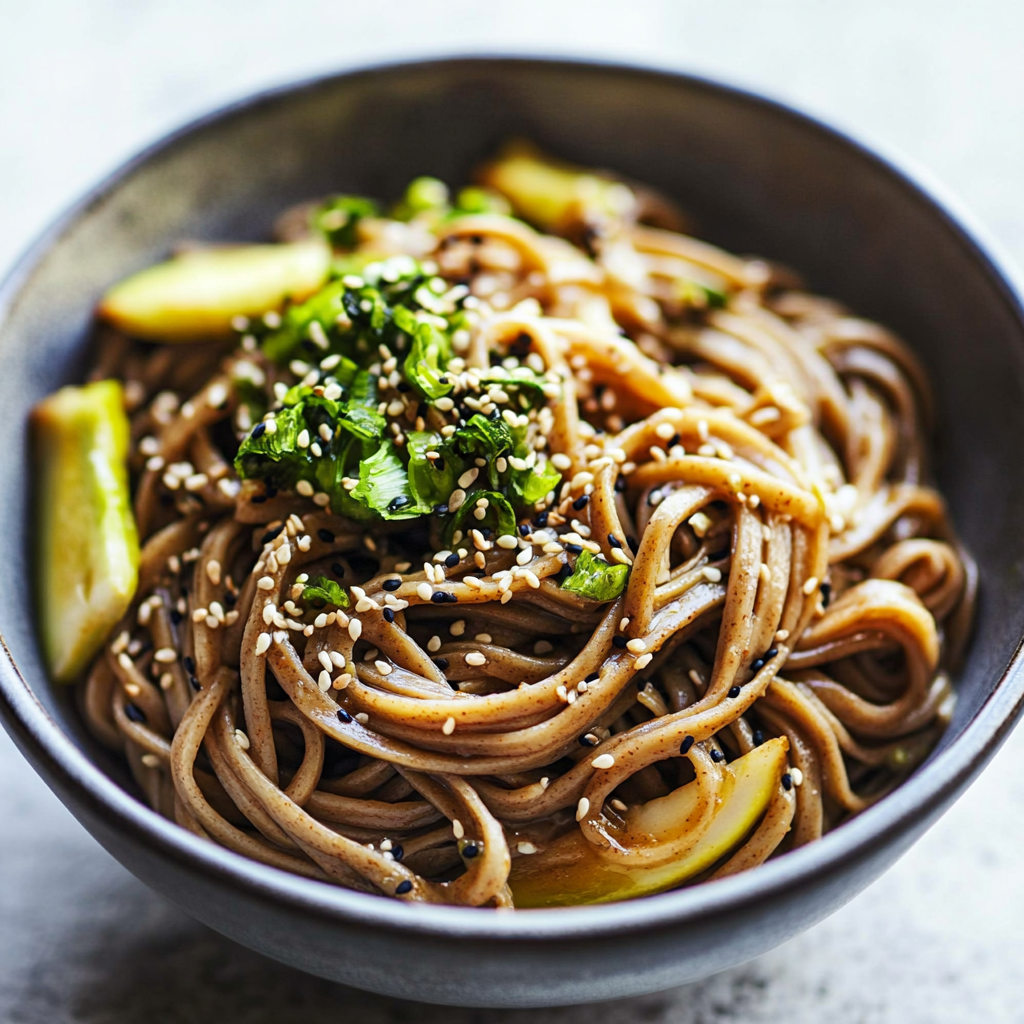
If you?re looking for a vibrant and flavorful dish that?s both comforting and nutritious, look no further than sesame soba noodles. This delightful Asian-inspired meal features buckwheat noodles tossed in a rich sesame dressing, complemented by an array of colorful vegetables. Perfect as a light lunch or a hearty dinner, these noodles are not only easy to prepare but also incredibly satisfying. In just under 30 minutes, you can whip up a bowl of these delectable noodles that will wow your family and friends.
Soba noodles are made from buckwheat flour, offering a nutty flavor that pairs beautifully with the sesame dressing. The addition of fresh vegetables adds crunch and nutrition to the dish, making it perfect for any occasion. You can customize your sesame soba noodles by adding proteins like grilled chicken or tofu for a complete meal. This recipe is not only vegan-friendly but also gluten-free when using 100% buckwheat soba noodles. So let?s dive into the essentials of making the best sesame soba noodles!
Main Ingredients
Buckwheat Soba Noodles
These traditional Japanese noodles are the star of the dish. Made primarily from buckwheat flour, they provide a unique flavor and chewy texture that is different from regular wheat-based pasta. For this recipe, you will need 8 ounces (about 225 grams) of dried soba noodles. Cooking them properly is essential; overcooked soba can become mushy while undercooked may be too firm.
Sesame Oil
Sesame oil brings depth and richness to your dish. Use 2 tablespoons of toasted sesame oil for an intense flavor that enhances the nuttiness of the buckwheat noodles. This oil is perfect for dressings due to its strong aroma and taste; it should not be heated at high temperatures as it can lose its distinct flavor.
Soy Sauce
Soy sauce adds saltiness and umami to your sesame soba noodles. Use 3 tablespoons of low-sodium soy sauce to keep the sodium levels balanced without sacrificing taste. You can opt for tamari if you prefer a gluten-free option.
Rice Vinegar
Rice vinegar contributes acidity to balance the flavors in this dish. Add 1 tablespoon of rice vinegar for brightness; it complements the nuttiness of the sesame oil beautifully.
Fresh Vegetables
For added color and nutrition, include 1 cup of mixed fresh vegetables such as bell peppers, cucumbers, carrots, or snap peas. Chop them finely to ensure they mix well with the noodles and dressing.
Green Onions
Green onions provide freshness and a slight bite to the dish. Use about 2-3 green onions, sliced thinly, as a garnish as well as an ingredient mixed into the salad.
Sesame Seeds
Finally, sprinkle toasted sesame seeds over your prepared dish for added crunch and decoration. About 2 tablespoons should suffice; they enhance both presentation and texture.
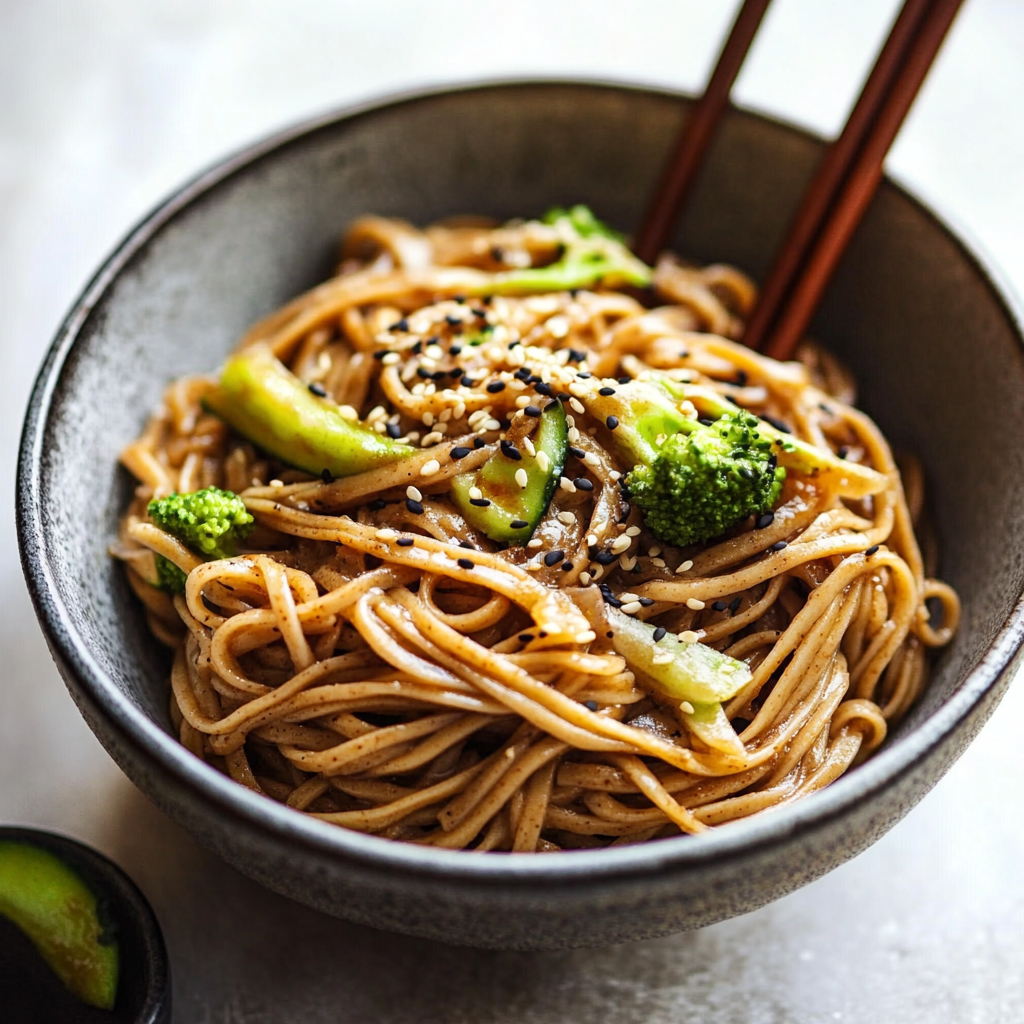
How to Prepare Sesame Soba Noodles
Step 1: Cook the Soba Noodles
Begin by boiling water in a large pot over high heat. Once boiling, add your measured soba noodles carefully to avoid splashing hot water. Stir gently during cooking to prevent sticking; follow package instructions for timing?usually around 4-6 minutes depending on thickness. To ensure they’re cooked perfectly al dente (firm but tender), taste them toward the end of cooking time.
Once done, drain the noodles in a colander but do not rinse them immediately?this retains some starch which helps sauces cling better later on. Allow them to cool slightly before rinsing under cold water until they are no longer warm; this stops further cooking and helps maintain their texture.
Step 2: Prepare the Dressing
While your noodles are cooling down, it?s time to prepare your dressing. In a small mixing bowl or jar with a lid, combine toasted sesame oil (2 tablespoons), low-sodium soy sauce (3 tablespoons), rice vinegar (1 tablespoon), and any additional seasonings you desire such as minced garlic or ginger for extra flavor.
Whisk or shake well until all ingredients are thoroughly combined into an emulsion?this will create a smooth dressing that coats every strand of noodle evenly later on! Taste test it now; adjust seasonings if necessary by adding more soy sauce for saltiness or vinegar for acidity according to personal preference.
Step 3: Combine Ingredients
In a large mixing bowl, add your cooled soba noodles along with chopped fresh vegetables like bell peppers or cucumbers?a mix adds great texture! Pour over your prepared dressing evenly across everything then toss gently using tongs or forks until all ingredients are well combined?the goal here is coating each noodle strand without breaking them apart too much!
Make sure everything gets coated nicely so that each bite bursts with flavor! If desired at this stage you can also incorporate proteins like grilled chicken strips or crispy tofu cubes for added sustenance if serving as an entr?e instead of just side salad!
Step 4: Plate & Garnish
Now it’s time to serve! Spoon equal portions into bowls ensuring everyone gets an appealing mix of both veggies and dressed noodles?this visually enhances presentation too! Top each serving generously with sliced green onions (2-3) plus those toasted sesame seeds (2 tablespoons) we set aside earlier?they’ll add crunchy texture contrast against soft textures from both vegetables & pasta alike!
This final touch not only makes it look pretty but also elevates overall taste experience?there’s something special about those little seeds popping in every mouthful! Serve immediately while still cool yet refreshing?enjoying right away ensures optimal flavor throughout meal experience.
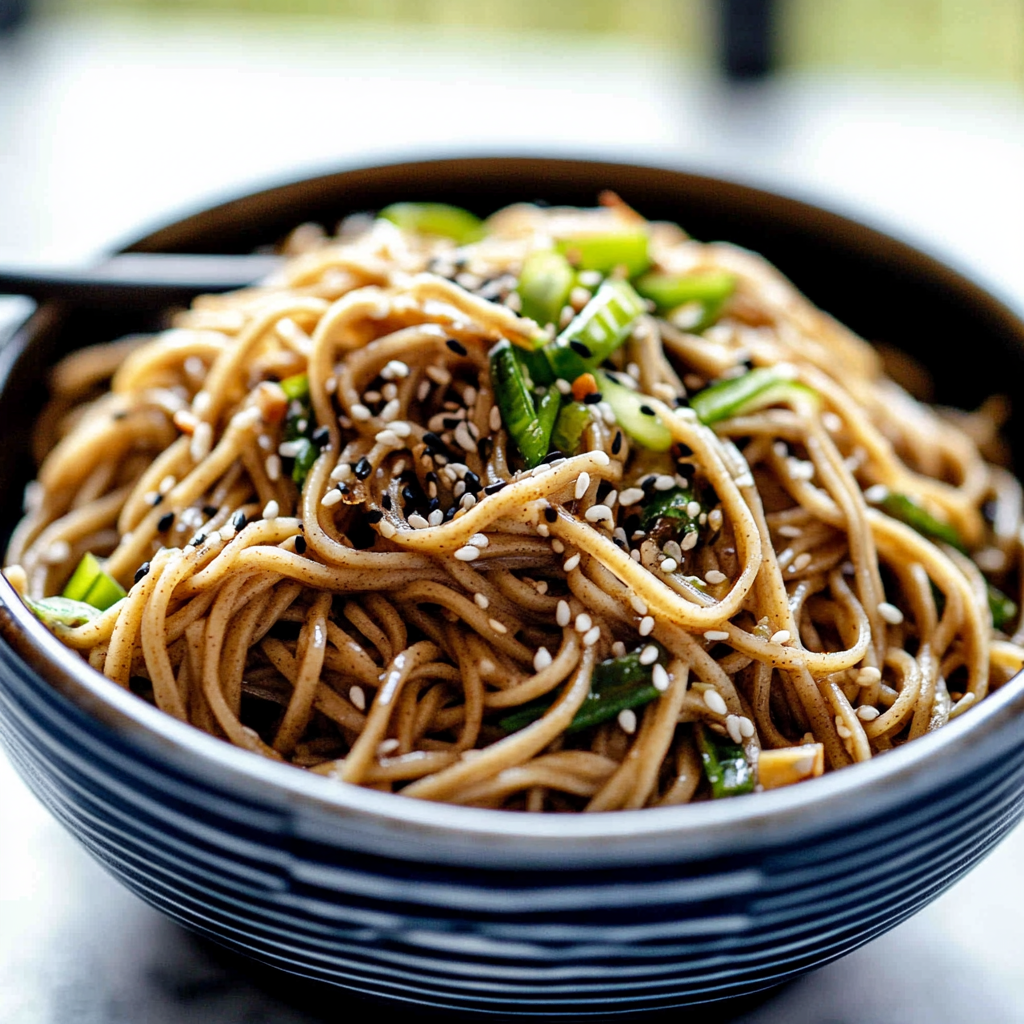
Serving and Storing Tips for Sesame Soba Noodles:
Serving Suggestions
To enjoy your delicious sesame soba noodles at their best, serve them chilled or at room temperature after preparing?this allows flavors enough time together meld into one cohesive bite! They pair wonderfully alongside grilled proteins like chicken skewers or shrimp tempura if you’re serving company?or simply enjoy solo straight from bowl!
For garnishes consider adding some extra crunch through roasted peanuts crushed up lightly sprinkled atop each portion before serving?it adds delightful texture contrast that’ll surprise guests pleasantly! Another option could be incorporating edamame pods alongside other greens providing both nutrition plus visual appeal when plated nicely together!
Consider serving alongside dipping sauces like spicy mayo or sweet chili sauce on side too?this way each person can customize their experience according to individual preferences while enjoying communal aspect sharing dishes together creates lovely atmosphere during mealtime gatherings!
Storage Guidelines
If you have leftovers after enjoying this delightful dish don?t worry?you can store them easily! Transfer any uneaten portions into airtight containers ensuring they?re sealed tightly; place in refrigerator where they’ll keep freshness intact up until three days maximum without compromising quality significantly afterwards though!
When ready again simply reheat gently using microwave while stirring occasionally until warmed through evenly again! Alternatively serve straight from fridge cold refreshing especially during warmer months cooling off palates nicely after hearty meals earlier enjoyed together too!
Feel free however adjusting proportions accordingly based upon how many people sat down at table initially?it always pays off having little extras left behind just in case someone wants more later on down road unexpectedly popping back around again wanting another round coming back hungry after busy day ahead waiting patiently till next chance arises enjoying flavorful meals prepared lovingly beforehand?so go ahead indulge freely knowing leftovers await eagerly awaiting return visit soon enough no matter what plans lie ahead next days following directly afterward!

Mistakes to avoid for Sesame Soba Noodles:
Cooking the noodles for too long
Overcooking sesame soba noodles leads to a mushy texture that detracts from the dish’s overall appeal. Always follow the package instructions for cooking time, typically around 4-6 minutes. To ensure perfect noodles, taste them a minute or two before the suggested time. Once they are al dente, drain them immediately and rinse under cold water to halt the cooking process. This step not only stops further cooking but also helps remove excess starch, preventing stickiness. Remember that the noodles will continue to cook slightly even after being drained, so it’s crucial to err on the side of caution.
Neglecting to season properly
Seasoning is key in any recipe, especially for sesame soba noodles. Failing to add salt during the cooking process can lead to bland noodles. Additionally, it’s essential to incorporate a flavorful dressing or sauce after cooking. A simple mixture of soy sauce, sesame oil, and rice vinegar can enhance your dish significantly. Taste as you go, adjusting seasoning levels based on personal preference. If you find that your dish lacks depth, consider adding ingredients like garlic or ginger for an extra kick.
Using low-quality ingredients
The quality of your ingredients can make or break your dish. When preparing sesame soba noodles, opt for high-quality soba noodles made from buckwheat flour rather than cheaper alternatives with fillers. Fresh vegetables add vibrant flavors and textures; choose organic produce when possible. The same goes for sauces?using artisanal soy sauce or pure sesame oil elevates your dish considerably. Investing in good ingredients pays off and ensures that your sesame soba noodles turn out delicious every time.
Not letting the noodles cool
After cooking your sesame soba noodles, it?s easy to throw them straight into a bowl without giving them time to cool down. This mistake can lead to clumping and an unappetizing texture when served. After rinsing with cold water, spread the noodles out on a baking sheet or plate to allow steam to escape completely. Letting them cool for about 10 minutes will help maintain their structure and make them easier to toss with other ingredients later on.

Tips and tricks for Sesame Soba Noodles:
Use a dressing with balanced flavors
Creating a well-balanced dressing is crucial for sesame soba noodles. Aim for a mixture that combines salty, sweet, sour, and umami elements. Start by mixing soy sauce with a touch of honey or maple syrup for sweetness and rice vinegar for acidity. Adding toasted sesame oil gives depth and richness while enhancing the nutty flavor of buckwheat noodles. You might also consider incorporating fresh herbs like cilantro or scallions for added freshness and brightness in flavor.
Incorporate protein wisely
To make your sesame soba noodle dish more filling and nutritious, consider adding protein sources such as grilled chicken, shrimp, or tofu. When marinating these proteins, use the same base as your noodle dressing; this creates unity in flavors throughout the dish. Cook proteins separately before adding them to your noodle bowl?this method prevents overcrowding in one pan which can lead to uneven cooking.
Don?t forget texture
Texture plays an essential role in creating an appealing dish of sesame soba noodles. Incorporating various textural elements enhances each bite’s enjoyment level significantly. Add crunchy vegetables like bell peppers or carrots along with creamy avocado slices for contrast. Toasted sesame seeds sprinkled on top add crunchiness while enhancing nutty flavors too! Consider garnishing with crushed peanuts or cashews as well; these additions create delightful layers of taste and texture.
Serve at room temperature
Sesame soba noodles shine when served at room temperature rather than hot or cold dishes straight from refrigeration! This temperature allows flavors within each ingredient?especially those delicate dressings?to harmonize beautifully together while maintaining their individual characteristics too! After preparing everything else (vegetables/proteins), let assembled bowls sit out briefly before serving; this method makes each mouthful enjoyable without overwhelming heat ruining those nuanced tastes!
Suggestions for Sesame Soba Noodles:
Experiment with different vegetables
One great aspect of sesame soba noodles is their versatility regarding vegetables! Feel free to experiment with whatever fresh produce you have on hand?think snap peas, bok choy, or even zucchini spirals! For maximum flavor retention without sacrificing nutrients during cooking times (boiling/steaming), cut veggies into bite-sized pieces beforehand so they cook evenly alongside those delicious buckwheat strands!
Add nuts and seeds creatively
Nuts and seeds not only provide healthy fats but also contribute delightful crunchiness when added generously atop finished dishes! Try sprinkling sunflower seeds over servings just before presenting them at mealtime; alternatively coat roasted chickpeas prior roasting session alongside any selected proteins mentioned earlier! Their nutty aroma complements both warm noodle bowls while providing satisfying bites!
Explore unique sauces
While traditional soy-based dressings work wonderfully well alongside classic preparations of sesame soba noodles; don?t hesitate exploring innovative sauce options! Consider experimenting by creating peanut buttery blends mixed with coconut milk & lime juice resulting in creamy textures paired unexpectedly well against savory tones present within this deliciously comforting meal option?endless possibilities await exploration here!
Pair with complementary beverages
Planning on enjoying some refreshing drinks alongside your meal? Look no further than light-bodied wines like Sauvignon Blanc which pairs nicely due its crisp acidity balancing earthy undertones found within both buckwheat & accompanying ingredients used throughout preparation process! Alternatively opt-in favor fruity iced teas infused citrus notes bringing uplifting vibes complementing overall indulgence experience while savoring delightful eats all evening long!
FAQs for Sesame Soba Noodles :
What are Sesame Soba Noodles?
Sesame Soba Noodles are a delicious Japanese dish made from buckwheat noodles, known as soba. These noodles are often served cold or warm and are typically tossed in a flavorful sesame sauce. The base of the sauce usually includes ingredients such as soy sauce, sesame oil, and sometimes a touch of mirin for sweetness. This dish not only showcases the nutty flavor of sesame but also highlights the unique texture of soba noodles. They are versatile and can be paired with various vegetables, proteins, or even served as a salad. Enjoying Sesame Soba Noodles is a great way to experience traditional Japanese cuisine while benefiting from the health advantages of buckwheat, which is rich in fiber and protein.
How do you cook Soba Noodles for Sesame Soba Noodles?
Cooking soba noodles is simple and quick. Begin by bringing a large pot of water to a rolling boil. Once boiling, add your soba noodles to the pot and stir gently to prevent sticking. Cook according to the package instructions, typically between 4 to 6 minutes until they are tender yet firm (al dente). After cooking, drain the noodles in a colander and rinse them under cold water to stop the cooking process. This step also helps remove excess starch, giving your Sesame Soba Noodles a pleasant texture. Toss the cooled noodles with some sesame oil to prevent them from clumping together before adding your desired sauce and toppings.
What can I serve with Sesame Soba Noodles?
Sesame Soba Noodles are incredibly versatile when it comes to pairing them with other dishes. You can serve them alongside grilled chicken, tofu, shrimp, or any protein of your choice for a heartier meal. Additionally, fresh vegetables like bell peppers, cucumbers, carrots, and edamame complement the dish beautifully. For added flavor and crunch, consider garnishing with toasted sesame seeds or chopped green onions. If you prefer a lighter option, enjoy them as part of a salad topped with fresh herbs like cilantro or mint. This adaptability makes Sesame Soba Noodles an excellent choice for any dining occasion.
Can I make Sesame Soba Noodles ahead of time?
Yes! One of the great advantages of making Sesame Soba Noodles is that they store well and can be prepared in advance. To do this effectively, cook your soba noodles as directed and toss them lightly in sesame oil to prevent sticking. Allow the noodles to cool completely before placing them in an airtight container in the refrigerator. They will remain fresh for up to three days. When ready to eat, simply reheat them gently in warm water or enjoy them cold straight from the fridge. Adding freshly made sauce or toppings just before serving will ensure they taste delicious.
Are there gluten-free options for Sesame Soba Noodles?
Traditional soba noodles contain buckwheat flour mixed with regular wheat flour, which means they aren’t gluten-free. However, you can find 100% buckwheat soba noodles at many grocery stores that cater specifically to gluten-free diets. These alternatives provide similar taste and texture while being suitable for those avoiding gluten. Always check labels carefully when purchasing since some brands may still have traces of wheat due to cross-contamination during processing.
How do I store leftover Sesame Soba Noodles?
To store leftover Sesame Soba Noodles properly, first allow them to cool down after serving. Place any uneaten noodles in an airtight container and refrigerate them within two hours of cooking to ensure food safety. They can last up to three days stored this way. When you’re ready to enjoy your leftovers again, you can either eat them cold as a refreshing salad or reheat them gently using warm water on the stovetop or microwave until heated through.
Conclusion for Sesame Soba Noodles :
In summary, Sesame Soba Noodles offer an enticing blend of flavors and textures that make for an enjoyable meal any day of the week. Their easy preparation allows home cooks to whip up a satisfying dish quickly while accommodating various dietary preferences by substituting proteins and veggies based on personal tastes or what’s available in your kitchen. Remember that these versatile noodles pair well with numerous ingredients; don?t hesitate to experiment! From garnishes like toasted sesame seeds to side dishes featuring grilled meats or veggies?there?s no wrong way to enjoy this delightful meal.
Whether you?re preparing it for lunch boxes or dinner parties, these noodles are bound to impress guests and family alike with their vibrant presentation and rich flavors. So go ahead! Embrace this delicious dish that beautifully blends health benefits with culinary satisfaction; your taste buds will thank you!
Print
Sesame Soba Noodles
- Total Time: 16 minutes
- Yield: Serves 4
Description
Sesame Soba Noodles are a delightful fusion of nutty buckwheat noodles and a rich sesame dressing, making for a refreshing and nutritious meal. This quick and easy recipe is perfect for busy weeknights or as a chic dish to impress guests. With the vibrant colors of fresh vegetables and the crunch of toasted sesame seeds, it?s not just a feast for the palate but also for the eyes. Enjoy it chilled as a salad or warm with your favorite protein. Let?s dive into this simple yet flavorful dish that everyone will love!
Ingredients
8 oz dried soba noodles
2 tbsp toasted sesame oil
3 tbsp low-sodium soy sauce (or tamari for gluten-free)
1? tbsp rice vinegar
1 cup mixed fresh vegetables (bell peppers, cucumbers, carrots)
2–3 green onions, sliced
2 tbsp toasted sesame seeds
Instructions
Cook soba noodles according to package instructions (4-6 minutes). Drain and cool.
In a bowl, whisk together sesame oil, soy sauce, rice vinegar, and any additional seasonings.
In a large bowl, combine cooled noodles with chopped vegetables. Pour dressing over and toss gently until well coated.
Serve in bowls topped with green onions and sesame seeds.
Notes
Substitute fresh vegetables based on seasonal availability.
For added protein, include grilled chicken or tofu.
- Prep Time: 10 minutes
- Cook Time: 6 minutes
Nutrition
- Calories: 280
- Fat: 10g
- Carbohydrates: 40g
- Fiber: 4g
- Protein: 8g